Our team has been featured in
You don't need a hundred acres or a trust fund. In five weeks, you go from a Pinterest board to a real property you scored yourself — and you'll know exactly what it'll cost to make it yours.
Join the Challenge →Our team has been featured in
You're standing on your property with muddy shoes, because you walked out past the mowed part to see where the light comes through the trees in the evening.
Your kids are somewhere behind you, already too far away to hear. There's a folder in a drawer at home with a deed in it. Your last name is on it.
You didn't inherit this. You didn't win it. You found it — in a county you chose on purpose, at a number that didn't need a trust fund — because at some point you stopped scrolling and learned how to actually look.
Let me show you how a family gets from here to there — and why almost nobody does, even the ones who want it most.
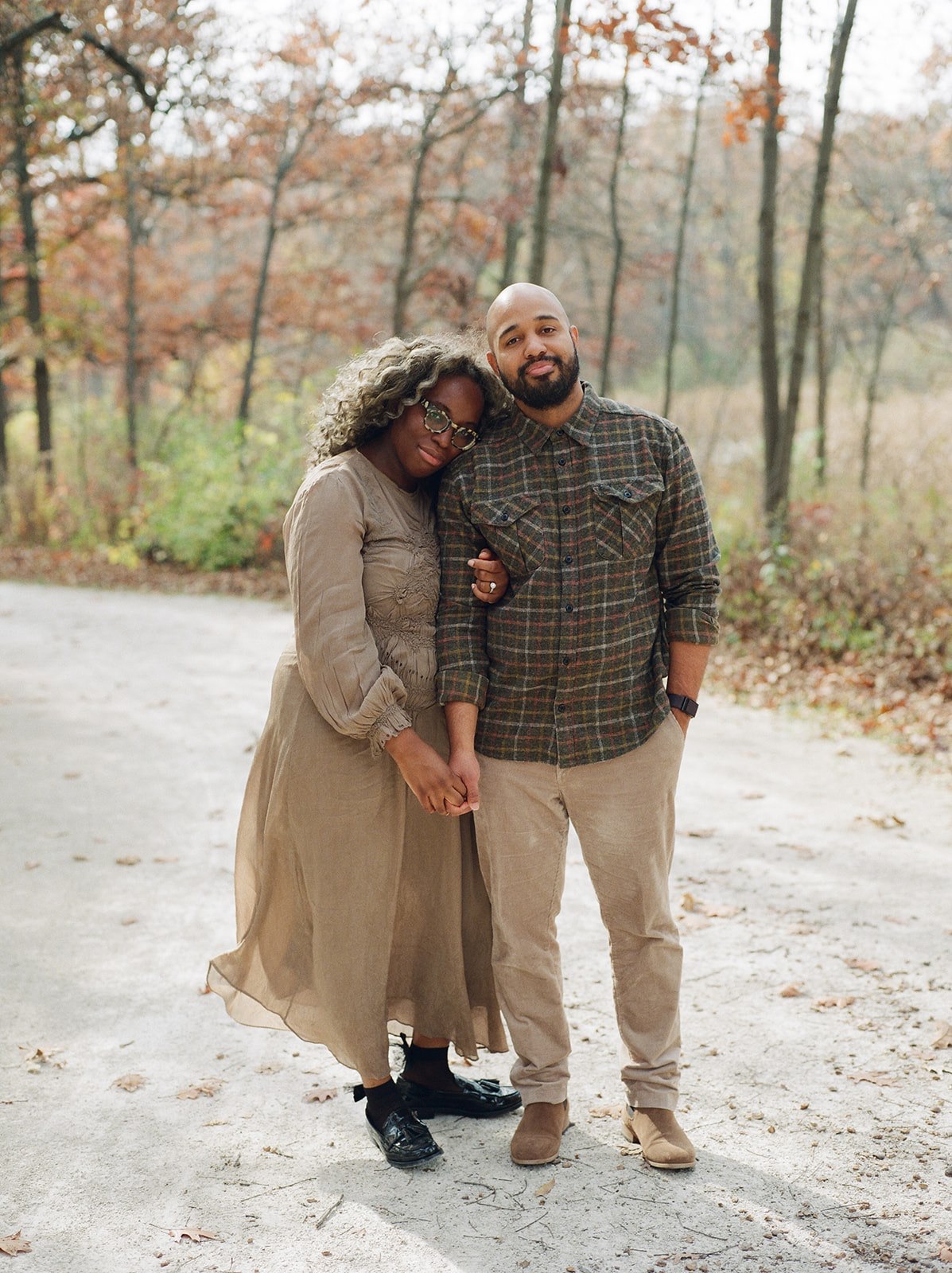
Hi — I'm Zim. Quick confession before anything else: I have a type, and it's a treeline.
Show me a stand of oaks along the back of a field and I start assigning bedrooms. My husband knows the face. He's started narrating it in the car — “there she goes” — while I'm already three fenceposts deep into a life we don't own yet.
So that's the unserious part. Here's the part that should make you trust me with the serious part.
I've spent my whole adult life walking up to things I had no business being able to do yet, and figuring out the map on the way.
At nineteen, I cloned a gene and toured the country giving talks about it. (A strange sentence to type, and an even stranger thing to have actually done.)
Right after college, I sold everything I owned and moved to India — because I've never been any good at sitting still.
In my twenties I built a company called Travel Noire from nothing, and sold it in 2017. I wrote a book, Dare to Bloom, and HarperCollins put it on shelves.
For all of it — every bit — I give the credit to Jesus. He is the very best thing that has happened to me & the reason I've been so blessed.

I tell you all that not to list a résumé at you. I tell you because I want you to hear the pattern: I am a person who walks up to big, intimidating, “that's-not-for-people-like-me” things and finds the door in. Repeatedly. On purpose.
And then my twenties ended, I got married and had babies, and everything shifted.
All that travel and adventure, all that being-the-face-of-everything — it went quiet. And I realized I wanted something I never thought I'd want: land.
A place. Dirt my kids could put their hands in. Somewhere this family could still be standing in eighty years.
So my husband and I started buying land. And I don't mean we dabbled. We buy land for real — about a hundred acres a year, on average, every year.
We make the offers. We sign the contracts. We walk the boundary lines with agents. We sit across the table from surveyors and call our bankers. We stand on a hill and watch the sun go down on ground that, by the end of that day, belongs to our family.
I've said it before and I mean it more every year: it's some of the most important work I've ever done. More than the gene. More than the company. More than the book.
Now — here's the honest truth, and it's the reason my company This Good Ground exists at all.
Here's the part a lot of people would lie about: we did not figure this out on our own.
There's no class for this. No “how to buy raw land” aisle at the library. The only reason we ever got off the sidelines is that people we knew who were already doing it showed us it was even possible — that a family like ours could actually own land.
I believe God put those people in our path on purpose. We were blessed, and I don't say that lightly.
I'll be honest about the other head start, too. We'd had real success in business before we ever bought a parcel, and that helped — some money behind us, and the nerve you get from having already done hard things.
I'm not going to pretend we started from nothing.
What I remember most from back then is the fear. My first real call to a land agent — I sat there rehearsing what to say like I was asking someone to prom, terrified of sounding like I didn't belong on the phone.
I finally called. He was kind, it was easy, and I hung up a little mad at how small the thing was that I'd let stop me. A year of someday, undone by a call I'd built into a mountain.
That fear is the thing I probably understand about you. Not because I read about it somewhere — because I sat in it myself.
And here's the real lesson, the one I could not have learned any other way: the thing that gets a family off the sidelines isn't a secret framework. It's the room.
It's being next to people doing the exact thing you're trying to do — people you trust, who'll answer the question you're embarrassed to ask, who'll walk you through the part that scares you. That's what I was given. That's what almost nobody has.
So let me be clear about what this is and isn't. I'm not here to turn you into us. Pin to Parcel is about your one dream property. Your family's forever parcel.
The skill you'll be learning has a name — land literacy — and I'll teach it to you. But you'll learn it the way it actually sticks: in a room, not off a shelf.
And before you decide that's a nice idea for someone else's budget, let me show you what it actually looks like on paper.
This is a real closing statement from one of our purchases. Eighty-plus acres. Look at line 303 — that's what we brought to the table to own it.
Three thousand dollars and change. Not a down payment we saved for a decade. Not a trust fund.
I'm not showing you that to brag. I'm showing you because I know that most families believe that they have a money gap. That's not it. It's an information gap.
Here's what I know now that I didn't then: the families who get onto land aren't richer than you. They're not holier or more qualified. They just stopped guessing — and they had someone in the room. That's the whole difference. And that's what I'm giving you.
Most families don't fail to buy land. They just get stuck in a loop. The same six stages, over and over. Tell me if you know it:
That's the Someday Loop. And here's why it holds good families for so long: it never feels like failing. It feels like being careful.
You know this loop. Now the harder question. When have you done it? Be honest. Name the parcel.
Before you scroll: how many years have you been saying someday about your family's land?
Whatever the number is — call it N — sit with it for a second. N springs, watched from the same window. N Thanksgivings you've said, “we're hoping to. One of these days.”
Your kids got N years bigger. The someday didn't budge. You can't get those years back. But you don't have to add another one.
Here's how I know how badly families want this. They write it to me. All day. In language so specific it stops me cold. Not “I'd like some property.” This:
“Definitely a creek. I've been dreaming the same dream for a long time — a creek, a wraparound porch, three houses comfortably apart. Same dream.”
“All that greenery made me long for home. A quiet southern space that freely yielded scuppernongs and figs, blackberries and musty scallions. It calls to me.”
“I see the For Sale signs while driving, pause, and wonder. Sometimes I even consider making a sharp U-turn.”
“Single mom here, who's been wanting my son and me to have our own land, with family.”
“We always figured buying land with a house already on it was the only option. Stuck with a fifty-year mortgage and never truly owning any of it.”
Read those again. That is not a vague itch. That's a blueprint. You already know the creek, the porch, the number of houses, the fruit on the fence. You can already see it. Every detail.
The dream isn't the missing piece. The how is. The bridge from “I can picture it exactly” to “my family's name is on it.” That bridge is a skill. And it's the whole thing I teach.
It's not that you're not trying. It's that you're grading land with no rubric — while looking in the two places that show you the least.
You checked Zillow against a feeling. You asked the one bank you know, and they got a look when you said “raw land.” You saved a Pinterest board you keep calling “just inspiration.”
Every time, you land in the same spot. A parcel you kind of love. A feeling you can't verify. A conversation with your spouse that trails off into the dishes.
All of that is just guessing. It feels responsible, which is exactly why it's so easy to keep doing.
You'd never buy the family home on a hunch. You'd get an inspection. You'd pull comps. You'd read every line. But nobody ever handed you the checklist for land. So a hunch is all you've had. And a hunch is exactly the thing that makes a careful family freeze.
You're not stuck because you're timid. You're stuck because you're smart enough to know you don't know, and honest enough not to fake it.
Here's the thing almost nobody tells you. And it changes everything once you see it.
There are two completely separate real-estate worlds. And they barely talk to each other.
The first one, you know by heart. It's the world of houses. Zillow and Redfin. A realtor named Karen who's lovely. Your bank. Open houses with cookies. Thirty-year mortgages.
This world is loud, public, polished, and built to be found — because the whole machine runs on you finding it. It is also, mostly, expensive, because it's selling you a house and a lawn and a school district and somebody else's finished dream.
The second world is the one most families never see. Raw land. And it runs on entirely different rules.
In the land world, the best parcels often never touch a public listing. They move through channels the house world doesn't use. And a whole profession you've probably never heard named out loud: the land consultant — people whose actual job is knowing where the land is.
This is why land feels out of reach when it isn't. You've been standing in the house world, looking at house-world prices, asking house-world banks, and concluding that land is for other people.
But you were reading the wrong map the whole time. You priced a dream off the menu from the wrong restaurant.

I know this, because I believed it too.
For a while I was sure the only land a normal family could reach was some sad, far-flung, nothing-special lot. Because the only land I knew how to find was the stuff dressed up for the house world.
The day someone showed me that second world, the number that had scared me for years turned out to be a fraction of what I thought. Not because I got richer. Because I finally knew where to look.
Here's the advice you've been handed your whole life about getting onto land. You've heard all of it. And every piece of it sounds wise and keeps you exactly where you are.
“Just save up first,” they said.
Reality: you could save for a decade and still not know how to tell a good parcel from a money pit. So the day you finally “have enough,” you're more likely to overpay — because you're emotional and untrained and tired of waiting. Money was never the missing piece. Literacy was.
“You can't really finance raw land — you'll have to pay cash,” they said.
Reality: this one keeps more good families parked than any other, because it sounds like hard math. It isn't. Banks are stingy on raw land, sure — but a bank was never your only door. Sellers carry the paper on land all the time: a few thousand down, and you pay them over the years instead of a bank. Nobody hands you that fact, so you sit there saving up the whole price for a deal that never needed it.
“Just use Zillow, everything's online now,” they said.
Reality: Zillow is the house world. It will faithfully show you the most expensive, most picked-over, least land-y land there is, and hide the channels where the real parcels move. The information isn't the problem. Knowing where to look, and how to judge what you find — that's the problem.
“Just get a realtor,” they said.
Reality: most residential agents don't do raw land, don't want to, and will gently steer you back toward a house with a yard, because that's the world they know. Land is a different profession. You need the second world's people, not the first world's.
You've been doing exactly what everyone told you to do. The problem was never you. It was the instructions — written for the house world, by people who've probably never bought a raw parcel in their lives.
So here's what actually works. It's a skill — a real one, the kind nobody ever taught you. Call it land literacy: knowing how to read a piece of land. What you're looking at. What it's worth. And when to walk.
Once you can see that second world, it cracks wide open. You pick one region on purpose, instead of scattering your hope across the whole country.
You learn the channels where real parcels move. You grade any parcel out of a hundred points before you ever fall for the trees. You learn the handful of dealbreakers that kill a piece of land no matter how pretty it is. And you learn the bravest skill of all: when to walk, and when to wait.
It comes down to four moves, in order. Find it. Score it. Fund it. Decide it.
Find it — the land the house world hides. Score it — grade the parcel on the real fundamentals, not the photos. Fund it — without needing to be rich. Decide it — move, negotiate, or walk, with a rule instead of a hunch.
That's the whole game. Find it, score it, fund it, decide it.
None of that is talent. All of it is teachable. I know, because I'm not special. I just learned it, and then I broke it down into steps small enough to hand to a family that's never done this before.
That's how you step off the Someday Loop. You don't do it by wanting land more than you already do. You do it by finally knowing what you're looking at.
Here's the whole difference, side by side.
Same dream. Same budget. The only difference is one of them knows what they're looking at.
Most families think land is out of reach because they've only ever priced the most expensive land, in the most expensive places, on the sites built for houses.
You looked at a five-acre spread an hour outside a hot city, saw the number, and closed the tab. Fair. That number is out of reach. But that number is a house-world number.
Now change the inputs. Pick a region on purpose — not the trendiest one, the right one for your family. Search the channels most people never touch.
Grade parcels on the actual fundamentals instead of the photos. When you do that, the number very often turns out to be a fraction of what scared you off.
I've seen a family put a few hundred dollars down on twelve acres — no bank anywhere in the deal. My own family put $3,013.58 down on eighty acres. Those aren't trophy deals or one-in-a-thousand flukes.
They're the kind of thing that lives in the second world, where you haven't been looking. I won't hand you a figure, because I don't know your region or your family. But the number that's been scaring you is almost always a house-world number anyway.
And here's the cost nobody even thinks to ask about — what it takes to keep land once it's yours. We pay $198 a year in property taxes on a 50-acre property. That's not a typo either. One hundred ninety-eight dollars, for the whole year — less than most families spend on a single month's utility bill.
Raw land is more within reach to buy than you were ever told — and once it's yours, it costs almost nothing to hold.
There are three families of land money — a house bank, a land lender, and the seller — and most families only ever ask the first one. A seller will carry six figures on a few thousand down, far more often than anyone tells you. Most families never hear that, so they spend years saving a down payment the deal never required.
What I will tell you is this: the gap between “we can't afford land” and “oh — we can actually do this” is almost never a pile of money. It's the skill to look in the right world, fund it the way families actually do, and judge what you find. That skill is the best money you'll ever spend.
Let me step back from the tactics and get earnest on you for a minute. Because if this were only about scoring a good deal on some acreage, I don't think either of us would care this much. And you do care this much. I can tell, because you're still here.
Here's what I actually think is going on when a family wants land the way you do.
You're not shopping. You're trying to leave something.
A place that outlasts you. Land that your kids' kids can stand on and say this was ours before I was born. Somewhere the whole family can gather that isn't a rented hall or somebody else's house.
Room to grow food, and grow slow, and grow up. Somewhere quiet in a loud, rented world.
When you slow the car for a For Sale sign, that's the draw. It's not a real-estate transaction. It's a legacy you can hand down.
The families I watch do this well understand something the loud money-culture never taught them: you don't buy land to prove you made it. You buy it to steward it — to be the person who finally plants the tree whose shade they won't sit in.
There's a reason the same phrases keep showing up in the letters readers send me. Taking territory. Boundary lines in pleasant places. Give us much land. Those aren't simple marketing lines.
I won't preach at you. I'll just say that when I stand on a hill and watch the sun go down on land that belongs to my family now, it doesn't feel like an asset. It feels like something more. Like I finally stopped saying someday to a thing I was clearly made to do.

That feeling is available to you too. It's closer and more affordable than you've been led to believe. The only thing in the way is the skill. And that's exactly what I'm here to hand you.
You don't want a scorecard. You want off the Someday Loop for good — a real parcel, in a real county, with your name headed for the deed.
So I built you that room, where you learn this next to people doing the same thing, with me in it. And then — because a room isn't enough on its own — a whole month where you galavant on some land in real time.
All the exact rubrics, regional filters, field-tested checklists, real parcels, word-for-word call scripts, owner-finance terms, the software, and hard-won lessons to find, score, fund, and buy your family's land. Plus five weeks in a community of families doing the exact same work the exact same weeks.
By the end of the summer, your family is standing on a real parcel — or you know exactly which one you're buying, and how you're paying for it without a bank. Not a course you file away. A decision you make.
The whole system is four moves, in order: Find it. Score it. Fund it. Decide it.
Five weeks, in two parts. One live week to learn it. Then a month to go do it for real.
It is a complete system.
We've added two live group calls: a Rest Stop in the middle, and a Show & Tell to close it out, where families share the land that they found.
And that’s why it’s built this way instead of one crammed weekend. Land is the biggest purchase most families ever make. You don’t need it faster. You need the step by step.
Let me put you inside it for a second.
Monday of week one, you and your spouse actually sit down — and for once the land talk doesn't drift into money and die on the vine, because you finally have the words. One-page vision, both names on it, on the fridge by dinner. Something in the house shifts that night. You feel it.
By Friday, you've got a real region, 5 to 10 real parcels open in Loam, the financing wall down and a signed next move. That's more forward motion than most families manage in five years.
Then the Field Trip slows everything to the speed of a real decision. You start making calls — and you're a little mad about how easy it turned out to be.
You stand on land with muddy shoes. You score the real place. And you decide — offer, negotiate, keep looking, or wait on purpose.
Not “know about.” Know how to do — on real land, with your own two feet. Here's the short list:
Most courses that promise to help you buy land do one of two things. Either they hand you a PDF of information and leave you alone with it — or they sell you a specific parcel, because they're really a broker in a teacher's costume.
Pin to Parcel is neither. It teaches you the skill, so you're never dependent on me — or anyone — to find land.
By the end of week one you have real parcels, scored, in a real region. Not notes. Parcels.
A week between each Pin Drop, on purpose, because you can't walk a parcel in a county three hours away on a Tuesday-night whim.
Christian families doing the identical work the identical weeks. You post your Field Note; they cheer; you cheer theirs. The Someday Loop is a lonely thing. This is the opposite of that.
Lifetime replay and lifetime vault access, so when you're ready for the next parcel — and there's always a next one — the whole method is right there.
Not a faceless portal. I open the week live, I'm in the group answering questions, and if you're in the Field Guide I'll put my eyes on your specific parcel before you sign for it.
Five lessons alone still leave you alone at eleven at night with forty tabs open. So three bonuses come with the Challenge — and the first one (Loam), you can't get anywhere else.
Five daily lessons — Vision, Region, Channels, Scoring, Decision — plus a live kickoff call, August 3–7.
Four weeks of boots on the ground, not theory. A land pro charges $1,500 to vet one parcel. You get four weeks of it.
Stop spending your nights searching. Tell it what you're after — it runs around the internet for you and comes back with real parcels. And links.
Every listing confirmed active the day it runs.
Four questions, in your own words. Two minutes, once.
Across the listing sites and channels you'd otherwise open one tab at a time, all night, for weeks.
Live listings you can click, price-check, and go stand on this week.
“Chickens by spring, a garden the kids fight over”
10–25 acres, some cleared, some woods
Within an hour of Monroe, Georgia
$180,000 — $40K down, $900 a month
What parcels your size actually list for in your region — county by county, what's in range, and the lowest you'd realistically see.
Drive time, acres, price, which of your must-haves it hits, the one concern — and a link straight to the listing.
The owner-finance checklist — how a seller carries six figures on a few thousand down.

Yours to run again on the next parcel — and there's always a next one.
Let's add it up honestly.
A land consultant charges $500 to $1,500 to vet a single parcel. A survey's another $500 to $3,000. And the family who skips all of it and gets one wrong?
That mistake starts around $30,000 and could head toward a courtroom. The only thing on this whole page that doesn't cost you a fortune is the system.
A five-week live cohort starting Monday, August 3 — one focused week of lessons, then a month on the ground. You finish standing on real land with a real decision. Two ways in: do it yourself, or have us on your parcel with you.
Everything you need to find, fund, and score a parcel yourself:
Everything in the Challenge, plus our eyes on your actual parcel:
Only 25 families. When the 25 are in, that door closes.
Join the Field Guide →The Challenge teaches you to score any parcel.
The Field Guide means you never sign for one without our eyes on it first.
“We can’t afford land.”
You’ll learn how families buy land with a few thousand down and no bank — real seller financing, real terms. Most people never hear it, so they spend years saving for a number the deal never needed.
“What if I pick the wrong one?”
Good. That’s exactly what the 100-point Land Score is for. It catches a bad parcel in an afternoon, on paper, before you ever sign — a zero in any one category is an automatic no, even on a parcel scoring 95. Walking away stops feeling like heartbreak and starts feeling like relief.
“I’m scared to call a stranger about land.”
So was I. Need a script? We got you. It’s easier than you think, and I’m in the room when you’re ready to make it.
“My spouse isn’t on board yet.”
Lesson one is the conversation, and it’s built for two. Most couples come out of that first night closer than they went in.
“I’ll start and stall, like every other time.”
Not here. You’re in a room of families doing the same steps the same weeks, and you post the parcel you walked. That’s the part that gets you off the couch.
“I don’t have time for another five-night Zoom.”
You don’t need one. Five short lessons, one a day, on video. Watch on your own time. I open Monday live and I’m in the community all week.
“Challenge or Field Guide?”
The $297 Challenge is the whole program, and families who pick it will do great. Choose the Field Guide ($997) only if you want our eyes on your actual parcel — the recorded Parcel Teardown, a private text line from the field, first dibs on the live calls, and a fast-track into Heritage. For a family about to sign for a piece of land, that’s easy math.
“Do I keep Loam after?”
You’ve got Loam for the whole challenge — that’s where you search, score, and track. Want to keep it running your search after? There’s a way to stay on. You’ll hear about it inside.
“Can I do it solo?”
Come as you are. It’s built for two, because most family-land decisions are — but solo folks are more than welcome and the method’s the same.
You could absolutely do this on your own. So let me tell you honestly what that road costs.
Do it alone. No one who's already done it, no room — just you, the internet, and a lot of expensive guessing. It bills you in the two costliest currencies there are: years, and mistakes on six-figure purchases.
Hire your way around it. Even if you find a pro who'll touch raw land, you're now renting their eyes for every decision, with no way to judge whether they're right — and you'll rent them again for the next parcel.
Keep doing what's free. Keep scrolling at midnight, keep saving the Pinterest board, keep filing parcels under someday. This is the most expensive option of all. The bill just comes in a currency you don't notice leaving the account: another year. Another spring from the same window. Another Thanksgiving of “one of these days.”
Or — for less than a few nice dinners out for the family — you learn the skill once, from someone who's signed at that table for hundreds of acres, and you own it for every parcel you'll ever look at for the rest of your life. When I lay it out like that, the $297 stops looking like a price. It looks like the shortcut it is.
Everything you need to find, fund, and score a parcel yourself:
Everything in the Challenge, plus our eyes on your actual parcel:
Only 25 families. When the 25 are in, that door closes.
Join the Field Guide →You're a family that wants one forever place and is done saying someday. First-time buyer, every time — that's exactly who it's for. You believe land is a way to steward something for the people who come after you. You're willing to do the work: watch the lessons, make the call, walk the parcel. You're patient enough to know a good decision takes a few weeks, not a few minutes.
You're an investor or flipper, or you want a list of parcels to buy and resell. You want someone to hand you a finished deal without learning anything. Or you're looking for a get-rich, six-figures-by-Friday thing — this is stewardship, not a scheme, and I'd rather say so now and save us both.
And here's what families tell me about learning to look at land with me:
“It was REAL facts — not the sugar-coating advice media throws at us for a buck. It felt like you genuinely want me to succeed. And you put scripture in it.”
“The words ‘taking territory.’ The Lord has me in Joshua this year — so I paused, and I bought the guide.”
“I always thought buying land was out of my reach. Prayerfully, by this time next year, we'll be landowners.”
“I honestly didn't realize buying land could actually be feasible.”
“Coming across you is divine timing. I'd literally prayed God would lead me to the right tools and resources for this.”
“Every morning my husband and I pray: Lord, give us much land, and be with us and our family. Your practical experience will be much appreciated.”
A reader wrote me this month. She'd found a listing on her own — a 6-acre lot in Robeson County, North Carolina — and instead of just staring at it and hoping, she asked the exact questions I teach: Would this be a new subdivision? Should I ask about livable acreage?
She asked. The seller wrote back: all six acres livable, mature pine, soil type Wakulla Sand.
Then, clear-eyed: “Honestly, it looks like a great deal — but I wouldn't know where to start.” And in the same breath: “I signed up for the challenge.”
That's the whole deal. She went from staring at a listing to making a call in a day. She didn't have some gift you don't. She picked up the questions and used them. That's not talent. That's land literacy.
Everything you need to find, fund, and score a parcel yourself:
Everything in the Challenge, plus our eyes on your actual parcel:
Only 25 families. When the 25 are in, that door closes.
Join the Field Guide →Here's my policy, plain: I don't keep money that doesn't earn its keep.
So here's the promise. Do the work — all five lessons, all four Pin Drops — and if you don't feel closer to your family's land than the day you started, email me and you'll get a full refund. No hoops.
And life happens. If a kid, a move, or a season you didn't see coming knocks you off track, you can defer once, to the next cohort, no questions asked.
You're not risking your family's dream. And you're not really risking the money, either. The only thing you're risking is another year of the open tab.
Let me tell you the real risk, because it isn't the one you're afraid of.
You may be afraid of buying the wrong parcel. Of overpaying. Of looking foolish. Those are the real fears, and they're the ones the Someday Loop uses to keep you careful and still.
But here's the truth: every one of those fears is fixable — that's the whole skill, that's the whole challenge. A rubric catches the wrong parcel. Knowing the channels keeps you from overpaying.
A room full of people who've done it takes care of the fear of looking foolish.
The one risk nobody can fix for you is the risk of someday. Because someday doesn't announce itself as a decision. It feels like patience. It feels like being responsible, waiting for the right time, being careful.
And it charges you anyway — one more spring, one more Thanksgiving, one more year of your kids getting bigger against a landscape that isn't yours.
I did the someday thing, in my own way, before I started in real estate. I told myself I'd get to it. I'd take the good and put off the hard part till later. And every single time, “later” cost more than “now” would have. Someday always sends a bill.
You've got two versions of this year in front of you.
In one, you take another lap. The tab stays open. Next December, same sentence at the table: “we're still hoping to — one of these days.”
In the other, you give your family this August. One focused week, then a month on the ground. By the end of the summer, you've stood on real land and made a real call. By next spring, there's a treeline that's yours — kids out past where you can see them, a porch spot you've already picked for the coffee, your last name on a deed in a drawer inside.
Same family. Same dream. Same God over both. The only difference is one week this August — and whether you were in the room.
Here's the timing: enrollment is open now and closes Friday, July 31 at 11:59 Pacific. The Live Week starts that Monday, August 3. The Field Guide really is limited to 25 families — and when they're gone, they're gone.
One step at a time.
Not the whole road — I'm not asking you to have it figured out. If you made it to the bottom of this page and if there's a part of you that says yes — the part that slows the car for the FOR SALE signs — listen to it this time.
And if you've prayed about this and the answer is no, or not now — thank you for being obedient, too.
Always pursue God. Always pursue peace. The boundary lines have fallen for me in pleasant places, and I believe there's a good ground with your family's name on it whether or not you walk through this door.
But if it's a yes — I'd love to see you inside.
Let's go. From someday, to today.
— Zim